
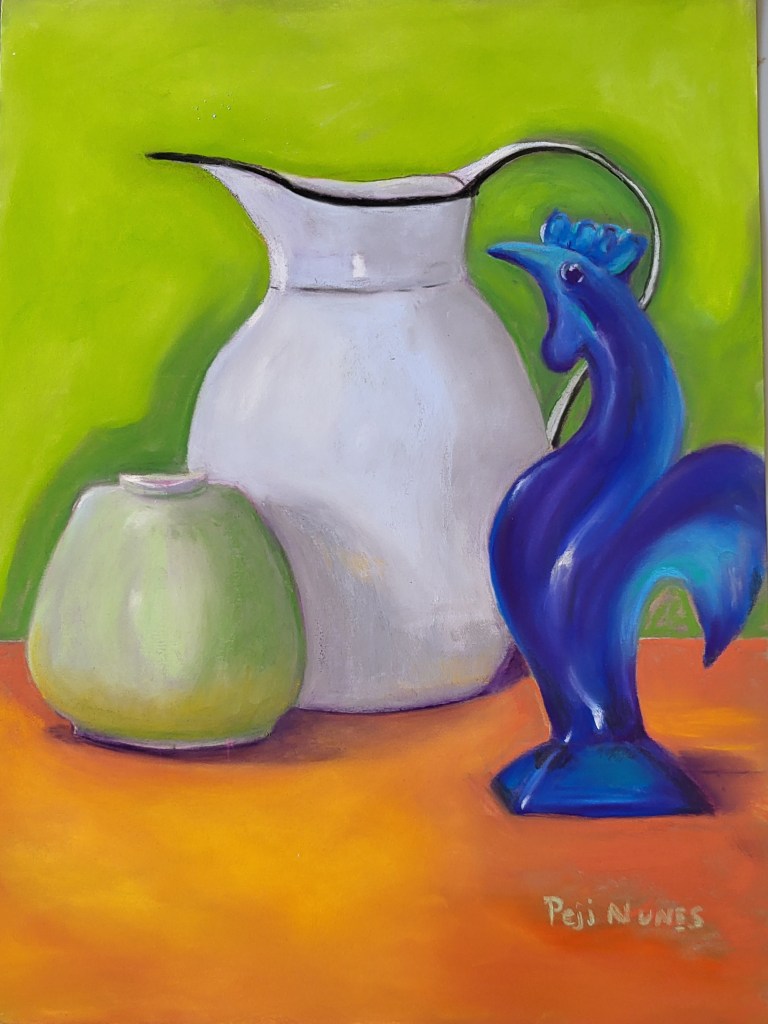
Shibui is. What?
I want to keep the follow thoughts in your mind. Shibui begins with action art or action painting? It is exactly what it sounds like. To do it takes actions! In the case of Shibui, Shibui is created on a foundation of Rives BFK printmaking paper or Strathmore Watercolor paper. Or an equivalent paper. The paper needs to hold water well without rippling when it dries or very little waviness. Foundations work better flat. The paper itself is a foundation, its color alone is a field. What do I mean by field? I teach what is known as the field event theory. The theory works well to explain the process of Shibui.
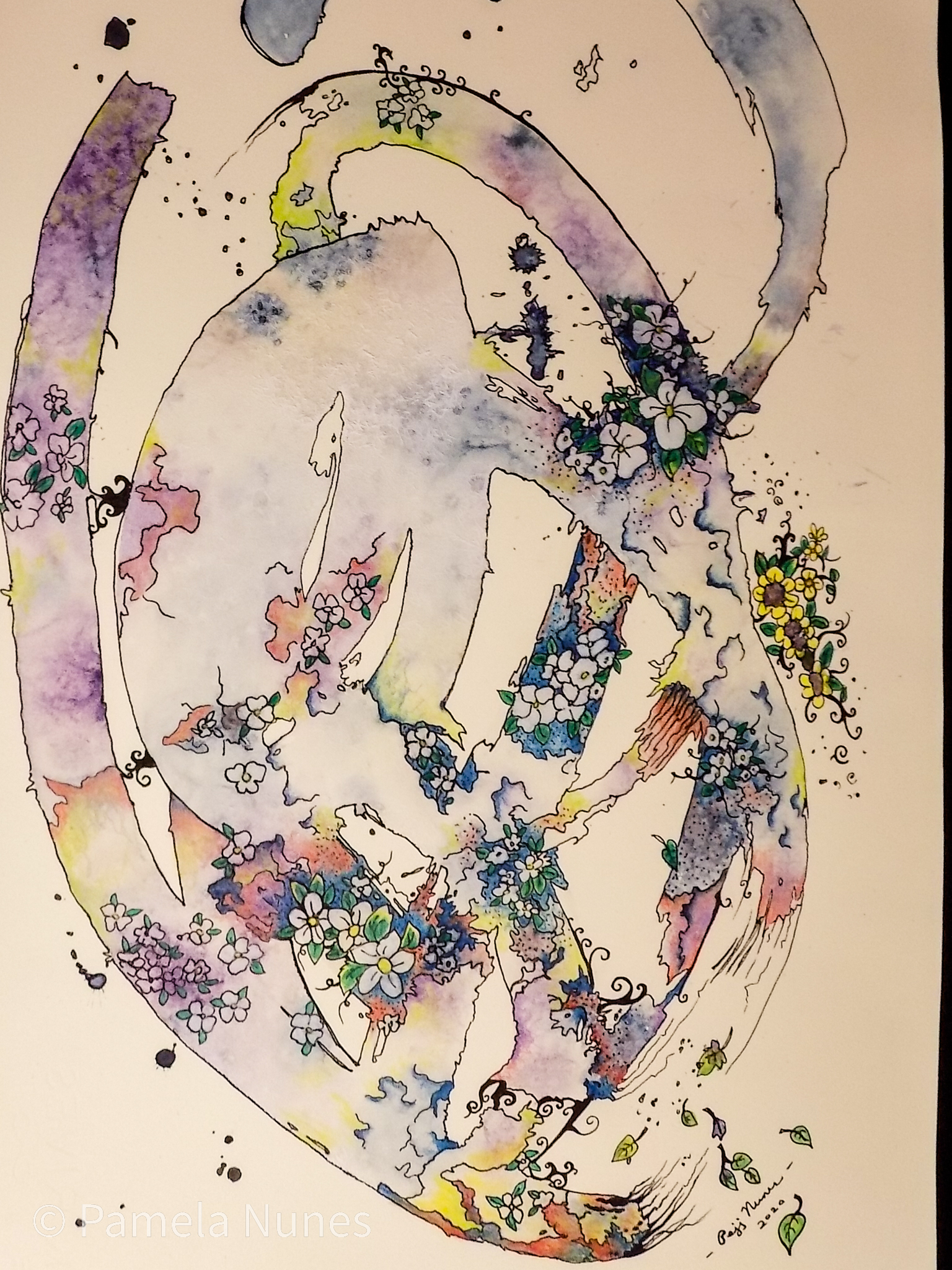
The next steps in the creative process of a Shibui is to apply wet medium to the paper. This is done through the action art once the kind and color of your medium are chosen. If you study the image on the right, a imagine all the black lines done by a 005- or 05-Micron pen. You can see where the medium is. In this case it was a very light tint of blue and purple, while wet coarse salt was sprinkled over the wet areas. If you see this up close you can see what texture, there is of growing salt crystals. They appear to continue growing until they reach a limit. This makes very interesting patterns on the paper.
This time the paper was wet with a brush making this shape. There are three, the intent a triptych. The ended up being heart shaped.
When finding what is there, I look for what is inspiring to me. Something about something will trigger a response. The more you do Shibui, the quicker it is to find. Yet some wont trip your trigger at all! In this I saw the centers of flowers and used those. The intentional part are the pedals of the flowers. I outlined patches of color using the exact edges of those patches or you might see them as blots of color. There is a definite edge of the dried watercolor. I use these first. And later if I need intentional marks, I will place them as needed to make the image become a whole illusion of abstract or realistic.
There are often the same comments made about Shibui. Mostly that they remind people of Japanese prints. I think it is the lines and colors used. They also remind me of Alphonse Mucha’s art deco. I did not realize this influence, but I had run across both as a young artist and had studied them. Also, I was quite familiar with comic books studying those images. I loved the magazines I came across that had articles on artist or the cartoons in them.
Another experience was that as a child I was to sit and wait and my imagination found things in what I looked at. Clouds of course, stains, etc! This became a habit.
The creating of a Shibui feels like when I design something with black india ink.
“Shibui is a great original art form and a great art therapy tool.”
Pejj Nunes

Every Shibui is different.!
Remember that I said about where lines are drawn there was an edge of the action art wet medium there. A wet medium dried will remind you of the edges left in the sand when the tide goes out leaving things high and dry until it returns. A pattern of where the water is, is there! The color used makes a line darker on its edges.
The fun of finding is in working your way around the events that happen during the action art part of things. Think of wallpaper for the moment. The repeated big parts of the pattern are events, and smaller parts in between those bigger ones are also events, smaller ones. The field foundation is the paper. However, what you have with action art is splatters, sprinkles, blots, there are runs of colored medium such as watercolor, or ink. The turning and tipping of the paper makes the ink flow. You can bleed color into the wet for some wonderful affects.
Once you have colors where you like them. You can blot or use salt or oatmeal! Anything that absorbs. a paper towel or rag pressed into the surface of the paper, lifted straight up! After blotting and even after drying you can repeat the process. First you will need to let absorbing materials like salt or oatmeal dry, or it won’t do what you want, and that is to create texture! Once this is very dry a straight edge ruler or a large triangle will take the absorbing materials off. This is done very carefully so not to tear the paper.
Next it is the finding process. In the image on the left, this is what I found. Islands of things! And so, this Shibui has made its own story! Nothing I planned, just what I saw and built upon. What I problem-solved forward so it would become.
I found what I call a Fairy Budda, a fire-man, a moose like character. flowers. leaves and rocks. The little dark monster was a surprise as the black color had a lot of texture to it, so when I used a blue pastel pencil over it, it was like a sanded paper. I learned some watercolors with a lot of pigment will do this.
The mustard color was acrylic paint, it is likely the other colors are watered down acrylic paints. But I will mix things up too.
Another thing about Shibui is that they require the viewer to be closer for the viewing distance. There is not much distance in this, it tends to be more 2 dimensional.
Flowers are often at odd angles. Characters have personalities of their own. There is no predawn understructure with a Shibui! Boom and it’s there! What you see is what it is! So go with it! Let it be fun.
Shibui forces you not to be so strict, instead you suddenly have the free mindset of a child. You’re using your imagination, you don’t have to plan the imagine, find meaningful context to represent, it doesn’t have to be pretty. You’re not confined by traditional art forms. This is why it works as an art therapy tool.
This said what should be under the image you create can be taught by teaching or knowing basic drawing skills. But they are not a requirement. If you are an artist already you know many things you can apply.
And instructor can teach how to shade, where to locate a light source when they teach Shibui. things will come naturally as they do with kids. An artist will bring things to a more complex level sooner is all.
For example, the use of pastel pencils requires many layers for something to look real. I bring may techniques into my shibui.
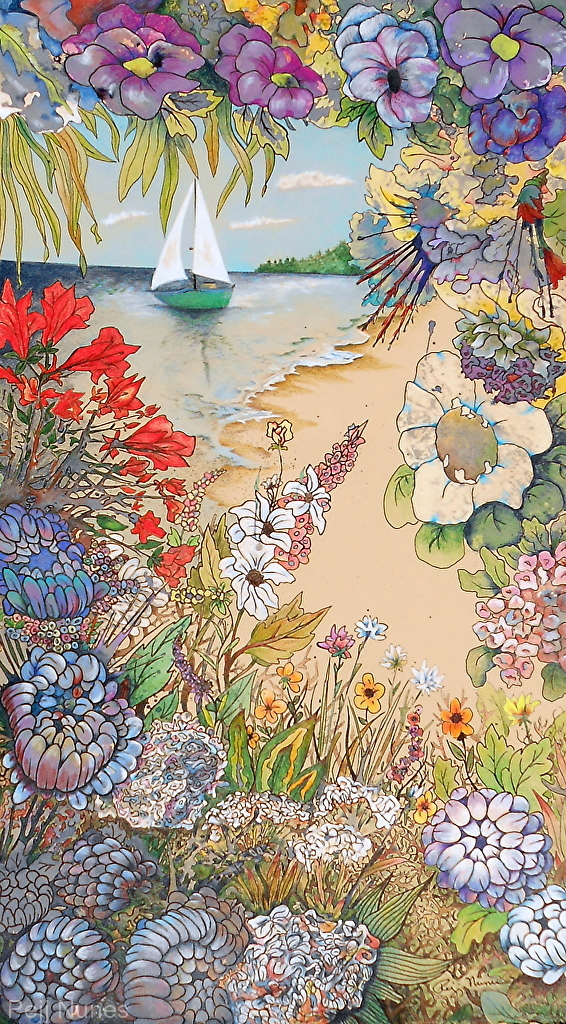
The Shibui below is more elaborately created. What parts are from action art? What parts are intentional? It has distance for example. It could be walked into. most edges were found and the mind triggered, the marks or the events became what you now see.
 Anisette Studio
You must be logged in to post a comment.