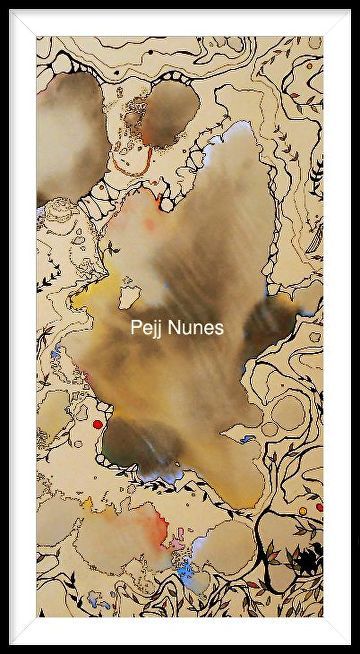
I call this type of Shibui a Mono Shibui, because in the making of the foundation the process is similar to creating Mono Prints. Design work is apparent through the use of the Black India Ink Micron pen. Pastel pencil enhances this Shibui.
A second blog today. It’s a quiet morning, cloudy with a promise of sun later. I am listening to an audible book as I sip coffee. Wait to hear a response from my bank. I have pulled some things apart looking for something. Why is it you can’t lay your hands on something you need? LOL Well, I shall ask St. Jude to help. I think he is the saint of lost causes. Asking does seem to help! Or I can call for a copy of what I want.
This type of Shibui is a good type to start learning Shibui techniques. Here the process is to follow the outer edges of the shapes, then finding the commonality, where design work through the use of lines creates visual connections. Color via pastels creates a kind of road map for the viewer to follow around the completed Shibui. When we view artwork, we look. studying it to learn how the artwork is made. The goal of an artist is to guide the viewer into the artwork. How deep can a viewer travel? As if they are in a mini space capsule, where will the mind take them? The imagination kicks in. Familiar experiences are mentally examined. The fills in what we see, solving it as having completeness.
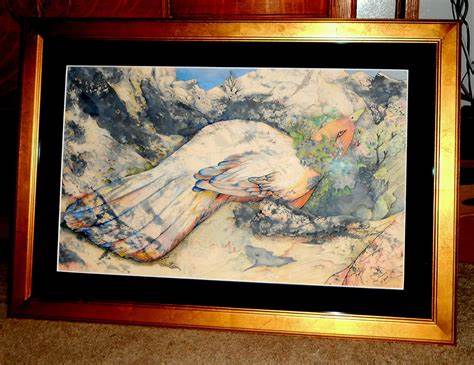
Title: “The Mourning Dove, by Pejj Nunes. Shibui’s are problem solved to remain what they become, a creation from the mind of its creator. When creating something similar as traditional art; it would not be as it is here. In this case it is centered, but that is not always what happens with a Shibui. I would not have put leaves in this way around the dove’s head. But in this case, I allow the foundation to tell me what I can do.
Best wishes! Pejj Nunes
 Anisette Studio
You must be logged in to post a comment.