
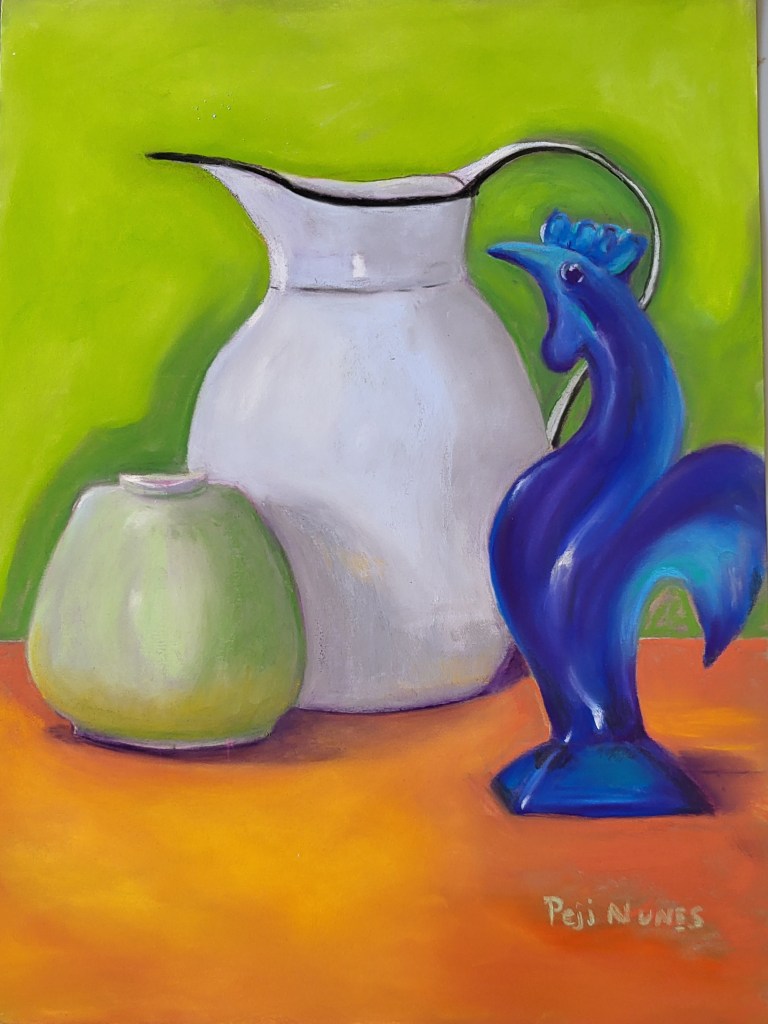
Due to interest in Shibui. I offer an excerpt from the manual about Shibui Found Image Art.
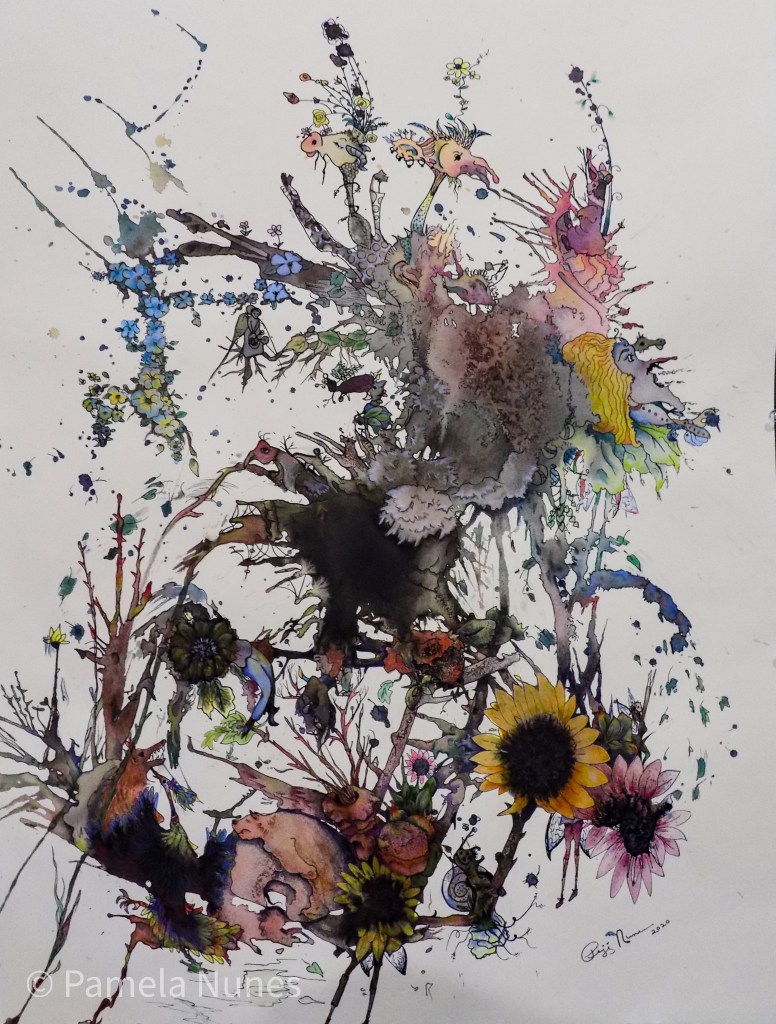
“Shibui Found Image Art is a form of artistic expression and a powerful tool for art therapy. It is a problem-solving art form that allows the mind to be free from the thoughts that create anxiety and stress. While it may not be about expressing feelings or thoughts like traditional art forms, it is about healing emotionally, mentally, physically, and spiritually. Shibui provides a unique way to have fun and remove anxiety and stress from the mind, offering a comforting and reassuring experience. The individual working on the foundation moves from one solved area to the next, and as they do so, the story of the Shibui evolves, often feeling very surprising. Artistic skill level is not essential; anyone can do Shibui. The instructor guides the process. However, the more advanced you are or become, the more you will create a more elaborate Shibui.
Shibui is not just about creating art; it’s about practicing and building upon one’s focus and concentration. The more your mind becomes trained to find what is there, the more you find, the more found shapes and forms become something, resulting in a completed Shibui. The more skilled you become at designing your Shiibui, the more confidence you have in creating it and other things in life. A can-do attitude makes a big difference!
The problem-solving process of Shibui requires a lot of focus when finding and solving the relationships of shapes to create believable forms. The creative process involves working with other forms within the same foundation, and focus is crucial for completing design work. Marrying shapes as form is design work, challenging the artist’s focus and engagement. This type of focus is beneficial for individuals who use art therapy, such as those with Bipolar disorders, Autism, brain injuries, disorders, and other medical challenges.
I know how Shibui has impacted my students with disorders such as Bipolar and Anxiety. All individuals found significant improvement in their ability to focus and overall happiness. Therefore, I can personally attest to the success of Shibui. There have been two individuals with bipolar and two with anxiety disorders. Their lives became better and more manageable. They have continued creating their own Shibui brands and other art forms.”
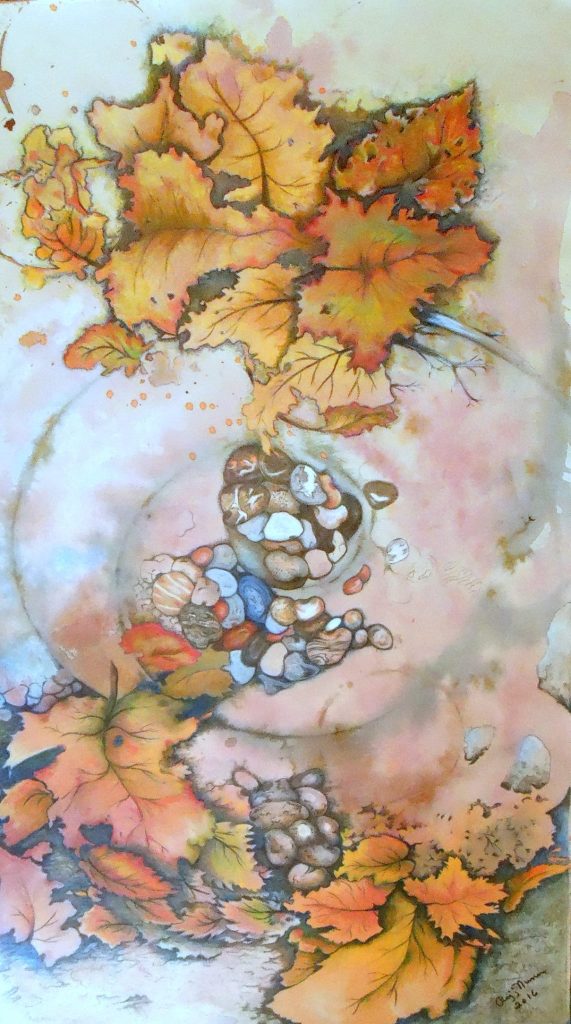
“A Shibui can be realistic, abstract, or cartoon-like. Such designs remind me of what I loved as a child. Some of the found images reminded of Japanese prints and the work of Alphonse Mucha, whose cards were in an old brown album found in the old two-family house we had moved into when I was young. I coveted this album because I loved those cards and the lithographic images on its pages. I am also reminded of printmaking, stained glass, and Tiffany.
The layering process of pastel pencils is a crucial component in bringing Shibui to life. The pastels enhance the hues and tones of watercolor or other wet mediums, except opaque mediums. Some mediums also create texture via the amount of pigment. The use of a blender pencil works to both blend and enhance colors. Small circles and patience with the pastels create excellent results as they layer Neo color Twos, which also helps enhance chosen areas. This technique and other techniques inspire experimentation and creativity.”
Unauthorized use and/or duplication of this material without express and written permission and acknowledgement or credit regarding Pejj Nunes is strictly prohibited. Thank you for being respectful.
Best wishes! Pejj Nunes
 Anisette Studio
4 responses to “Good Evening! Sunshine!”
I am unclear how you use the watercolour pencils with the paint. Could you explain the process or direct me to a pertinent tutorial?
LikeLiked by 1 person
The first layer is the wet medium of choice, let’s say watercolor. Your found Image looks like an iris to you, Let say it needed a couple more petals. Once the image is “drawn” (we have found the shapes which make the form or forms. Perhaps it looked like it had a stem as well. Now imagine what happens with your light source on the left corner, cascading down. Where shadows would naturally happen this is where I shade things darker, lightly and then darker. I find to get my darkest colors a forest or dark green, dark purple or Indigo blue (my favorite work the best. Oh wait your saying water color pencils! I drop s small amount on an old plate, take the watercolor pencils and run it in a circle until I get the tint I want. The pigment will color the water nicely as you “stir”. Then I use a brush to make the marks or to enhance an area. I like small brushes. If you need to create a shape to round out a form this works well in producing a shape like what would come from the action art. Let me know I am confusing. Sometimes I use the softened end of the pencil, if dipped in water that tip gets soft, at that point it will make a thick dark pigmented mark.
LikeLike
Beautiful painting
LikeLiked by 1 person
Thank you! May your day be a very good one! Best wishes! Pejj
LikeLiked by 1 person